The Forgotten Kings of the Lightweight Wars
THE SCORECARD / THE FORGOTTEN KINGS OF THE LIGHTWEIGHT WARS
HOLLY HUMPHREY
The Forgotten Kings of the Lightweight Wars
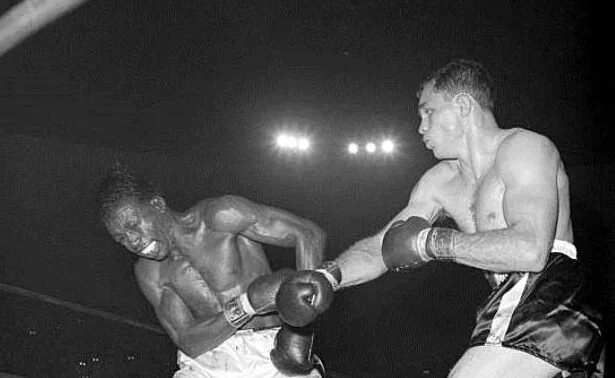
Joe “Old Bones” Brown
For six years, Joe Brown ruled the lightweight division with quiet authority. From 1956 to 1962, he was the undisputed champion of the world, making eleven successful defences, an achievement that once stood as a record for nearly two decades. Yet today, his name is rarely mentioned when boxing’s great champions are recalled.
Brown was born in New Orleans on May 18, 1926, and began his professional career there in 1943. He was a lean, sharp-featured man whose ringcraft earned him the nickname “Old Bones”. After his debut, World War II interrupted his momentum and he wouldn’t fight again professionally until after the war’s end. By 1947, he was facing world-class competition, including a young Sandy Saddler, who stopped him in three rounds. That loss, like so many early setbacks in Brown’s career, became a lesson rather than a wound.
He spent years travelling the boxing circuit. In 1950, he went as far as Australia, boxing four times there, honing his craft through sheer repetition. His style matured into something subtle and intelligent, he fought like a man who had come to understand every rhythm and feint in the game.
In May 1956, Brown outpointed Bud Smith in a non-title bout. Three months later, at age thirty-one, an age when most lightweights are already past their prime, he met Smith again in New Orleans, this time for the championship. Over fifteen rounds, Brown boxed with the poise of a man who had been waiting his entire life for that moment and he left the ring as the new lightweight champion of the world.
He began 1957 by stopping Smith in eleven rounds in Miami and from there he reigned with a champion’s consistency. For the next five years, Brown turned back every challenger. Age eventually caught up to him. On April 21, 1962, in Las Vegas, he faced Carlos Ortiz, a younger, faster man destined for his own Hall of Fame career. Brown, then thirty-seven, gave everything he had left, but the years had dulled his reflexes. Ortiz won a one-sided decision, and the long reign of “Old Bones” came to an end.
Brown fought on for eight more years, the same way he had always lived, quietly, without complaint, showing up and doing the work. He retired in 1970, one month shy of his forty-fifth birthday, with a record of 162 fights: 104 wins, 44 losses, 13 draws and 47 knockouts.
For a time, he seemed forgotten, remembered only by those who cared deeply about the sport’s history. But in 1996, when Joe Brown was inducted into the International Boxing Hall of Fame, thousands of fans rose to their feet to cheer him. It was as if the boxing world had suddenly remembered what it once had, a champion and a man who gave the game his life.
Joe Brown passed away the following year, on November 21, 1997. His body may have grown old, but the grace and intelligence he brought to the ring, those, like “Old Bones” himself, endure.
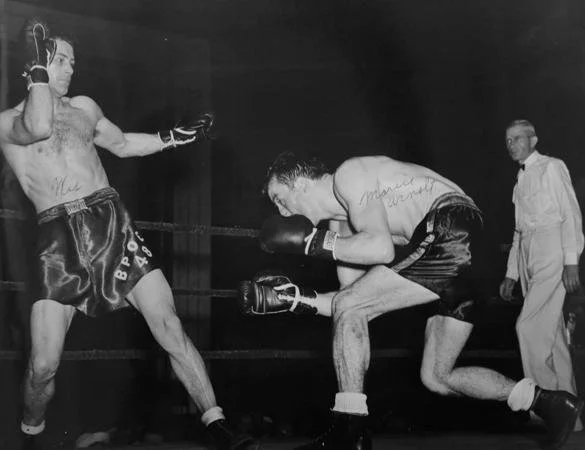
Wesley Ramey
Some fighters wear their greatness like a crown. Others carry it in silence, their accomplishments buried beneath the names of champions they might have beaten had fortune smiled differently. Wesley Ramey was one of the latter, a master boxer who spent a decade among the world’s best lightweights without ever getting the chance to call himself champion.
Born on September 17, 1909, in Grand Rapids, Michigan, Ramey came of age in an era when boxing was both a livelihood and a proving ground. He turned professional in 1929, following a brief amateur career and soon became one of the busiest fighters in the Midwest. In 1930 alone, he fought twenty-one times, building his name the hard way, night after night, town after town.
Ramey was a stylist, a craftsman. He boxed with precision rather than power, relying on movement and timing. His record, 195 fights, 158 wins, 26 losses, 11 draws and only 9 knockouts. It tells the story of a man who preferred to outthink his opponents rather than overpower them.
By the early 1930s, Ramey was recognised as one of the best lightweights in the world. In 1932, he defeated former featherweight and junior lightweight champion Benny Bass. A year later, 1933, was his breakout season, victories over future junior welterweight king Battling Shaw, ex-champion Johnny Jadick, and in a ten-round non-title bout, a brilliant win over reigning lightweight champion Tony Canzoneri. It was the kind of performance that should have earned him a title shot. It never did.
Still, Ramey kept fighting and kept winning. He defeated top contenders and continued to refine his art until the boxing world began calling him what he had always been, the uncrowned lightweight champion of the world.
He retired in 1941, denied the one opportunity that would have sealed his legacy in the record books. After hanging up the gloves, Ramey stayed close to the sport, training both amateur and professional fighters in his hometown of Grand Rapids. He lived long enough to see the sport evolve and passed away on March 10, 1997.
Wesley Ramey never wore a championship belt, but to those who understand the nuances of boxing, the art within the violence, he remains a champion nonetheless.
References:
http://www.ibhof.com/pages/about/inductees/modern/brownjoe.html
http://www.ibhof.com/pages/about/inductees/oldtimer/ramey.html