Marvin Hagler: The Fighter The World Tried To Avoid
THE SCORECARD / THE FIGHTER THE WORLD TRIED TO AVOID
HOLLY HUMPHREY
Marvin Hagler: The Fighter The World Tried To Avoid
“After the final bell there is only going to be one guy standing, and that guy is me.”
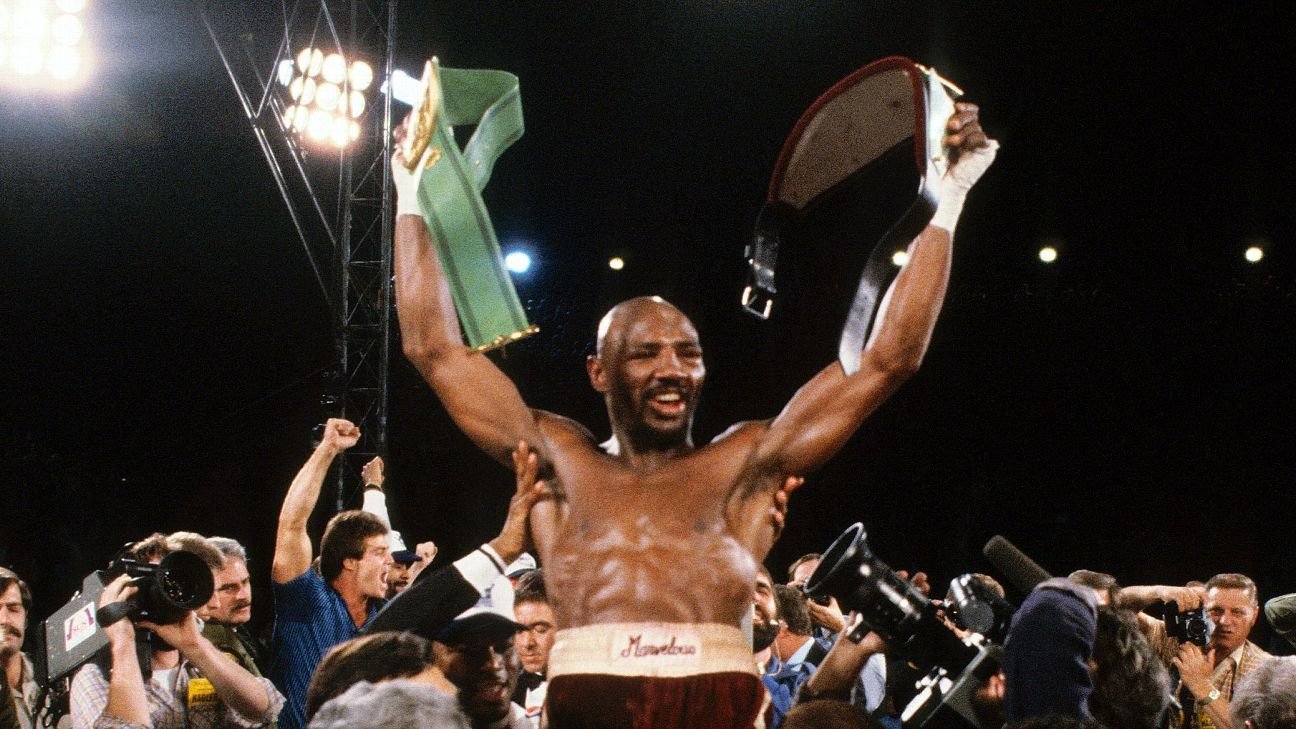
From 1980 to 1987, Hagler stood at the top of the sport as the undisputed middleweight champion, defending his crown 12 times and stopping opponents with a ruthlessness that produced a division-record knockout rate of 78 percent.
He was born Marvin Nathaniel Hagler on May 23, 1954, in Newark, New Jersey, the first child of Ida Mae Hagler. His early world was small in an all-Black neighbourhood. By ten years old he slipped a glove over his hand for the first time. By fourteen, he had dropped out of school and taken a job in a toy factory, not because he lacked ambition, but because survival in the Hagler household depended on every available pair of hands. Years later, he would recall this period, his role being to lighten his mother’s burden.
In 1967, Newark exploded in violence. The riots left 26 people dead and millions in property damage; the streets Hagler knew became a battlefield. Ida Mae moved her children to Brockton, Massachusetts, searching for safety. Instead, Marvin found alienation. This was an all-white enclave, and with the move he left behind friends who would soon vanish, some to drugs, others to death.
Two years later a beating in a street fight provided the final catalyst. Hagler walked into a local boxing gym and began the process of reshaping himself. At fourteen in 1973, he had captured the National AAU 160-pound title and was named the tournament’s outstanding boxer. A professional career followed, yet Hagler was too good and too dangerous for his own good. Big names refused him.
Still, he kept winning, and eventually the sport could no longer ignore him. Victories over men like Sugar Ray Seales forced attention his way, and promoter Bob Arum took notice. After seven years and fifty professional fights, Hagler finally received his championship opportunity. When he won the middleweight title.
Hagler’s prime coincided with the sport’s last great renaissance, the era of the Four Kings. Roberto Durán, Thomas Hearns, Sugar Ray Leonard, and Marvin Hagler, four fighters with Hall of Fame credentials. Hagler’s 1983 victory over Durán revealed a champion willing to think as well as brawl, Durán lasted the full 15 rounds, but Hagler’s unanimous decision was never in doubt. His 1985 war with Thomas Hearns remains one of boxing’s most incandescent nights.
And then there was Leonard. In 1987, after 12 rounds Hagler lost a split decision that remains one of the sport’s most debated verdicts. For Hagler, it was another reminder that boxing’s politics could wound more deeply than its punches.
He retired the following year, leaving the sport in June 1988 with no desire to return. Hagler moved to Italy, acted in films, and worked as a television commentator for British TV.
On March 13, 2021, Marvin Hagler died in New Hampshire at age 66, the victim of an ordinary heart attack. For a man who had survived the streets of Newark, the riots, the long road to recognition, and the unforgiving theatre of championship boxing, the manner of his death was disarmingly simple.